Gut Microbiome Health and Mental Well-Being: What Research Actually Shows

If you’ve ever felt overwhelmed by gut health advice, you’re not alone. One day, headlines claim your gut is the “second brain.” The next, you’re told probiotics are useless, food is overrated, or mental health is mostly genetic anyway. It’s confusing-and often exhausting-especially if you’re already dealing with low mood, anxiety, or brain fog.
Here’s the grounded truth: gut microbiome health and mental health are connected, but not in a simplistic or magical way. The relationship is supported by growing scientific evidence, yet it’s gradual, highly individual, and shaped by daily habits-not quick fixes.
This article walks you through what the research actually shows, where the limits are, and how you can take realistic, evidence-based steps to support both gut microbiome health and emotional well-being.
Table of Contents
Gut Microbiome Health: The Basics (Plain English)
What Is the Gut Microbiome?
Your gut microbiome is the collection of trillions of microorganisms-mostly bacteria-that live in your digestive tract. These microbes aren’t just passive passengers. They actively:
- Help break down fiber and complex carbohydrates
- Produce vitamins, including vitamin K and certain B vitamins
- Train and regulate your immune system
- Create chemical signals that communicate with your brain
Each person’s microbiome is unique, shaped by early life, diet, environment, medications, stress, and lifestyle.
What “Healthy” Gut Microbiome Health Really Means
Despite what marketing suggests, gut microbiome health does not mean having the “right” bacteria or following a perfect diet.
Research suggests a healthy microbiome is characterized by:
- Diversity (many different species, not dominance by one)
- Stability over time
- Resilience, meaning it can recover after disruptions like illness, travel, or antibiotics
Large population studies show that greater microbial diversity is associated with better metabolic, immune, and mental health outcomes, though it’s not the only factor involved.
How the Gut and Brain Communicate
The Gut–Brain Axis (Without the Jargon)
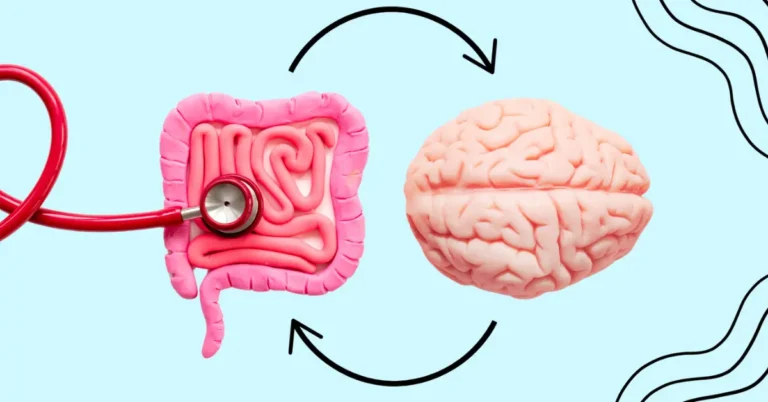
Your gut and brain are in constant two-way communication through what researchers call the gut–brain axis. This connection works through several overlapping systems:
- The vagus nerve, a major nerve that runs from the gut to the brain
- Hormones, including stress hormones like cortisol
- Immune signaling, especially inflammatory molecules
This means your mental state can affect digestion-and your gut environment can influence how your brain processes stress and emotion.
Key Substances the Gut Produces That Affect Mood
Gut bacteria don’t produce emotions directly, but they influence the conditions that shape mood. For example:
- Short-chain fatty acids (SCFAs)
Produced when gut bacteria ferment fiber. SCFAs help maintain the gut lining and regulate inflammation. Chronic inflammation has been linked to depression in some people. - Neurotransmitter pathways
Approximately 90% of the body’s serotonin is produced in the gut. Although this gut-derived serotonin does not pass directly into the brain, it affects nerve communication and immune activity that play a role in regulating mood. - Inflammatory balance
An imbalanced microbiome may increase pro-inflammatory signals, which are associated with depressive and anxiety symptoms in some individuals.
Systematic reviews published in PubMed-supported journals consistently highlight inflammation and immune signaling as key links between gut microbiome health and mental health.
What Research Shows About Gut Microbiome Health and Mental Health
Depression and Anxiety
Multiple observational studies have found that people with depression or anxiety often show:
- Lower gut microbial diversity
- Differences in specific bacterial groups involved in inflammation and metabolism
- Higher levels of inflammatory markers in the blood
A 2019 meta-analysis found consistent associations between altered gut microbiota composition and major depressive disorder. However, it’s critical to understand the limitation: association does not equal direct causation.
Mental health conditions are influenced by genetics, trauma, stress, sleep, social support, and access to care. Gut microbiome health is one piece of a much larger puzzle.
Stress, Mood Regulation, and Resilience
Chronic stress can change gut motility, stomach acid production, and intestinal permeability. Over time, this can alter gut microbial balance.
At the same time, a more diverse and stable microbiome may help regulate stress responses. Human cohort studies suggest that individuals with healthier gut microbiome patterns show better emotional regulation and stress resilience, though effects are modest.
What Research Does Not Support
It’s just as important to know what the evidence does not show:
- There is no single “happy bacteria”
- You cannot cure depression by fixing your gut alone
- Diet changes do not replace therapy, medication, or medical care
This is not failure-it’s realism.
Food Patterns That Support Gut Microbiome Health
Fiber as the Foundation
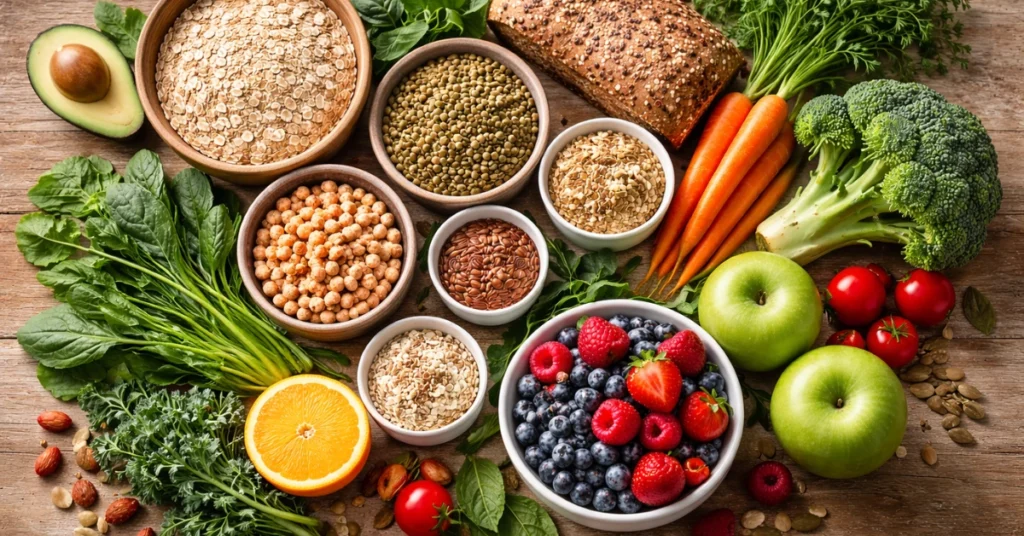
Fiber is consistently the most important dietary factor for gut microbiome health.
Why fiber matters:
- Humans don’t digest fiber-but gut bacteria do
- Fermentation of fiber produces SCFAs
- SCFAs support gut barrier integrity and immune balance
Most adults consume 15–18 grams of fiber per day, while research suggests benefits closer to 25–38 grams per day, depending on sex and body size.
Fiber-Rich Foods That Support Gut Microbiome Health
| Food Category | Examples | Typical Fiber per Serving |
|---|---|---|
| Whole grains | Oats (½ cup dry), barley | 4–8 g |
| Legumes | Lentils (½ cup cooked), chickpeas | 6–8 g |
| Vegetables | Broccoli, carrots, spinach | 2–5 g |
| Fruits | Apples, berries, pears | 3–6 g |
Important: Increasing fiber too quickly can cause bloating or discomfort. Gradual increases over 1–2 weeks are better tolerated.
Fermented Foods: Helpful, Not Magical
Fermented foods like yogurt, kefir, kimchi, and sauerkraut contain live microbes.
Clinical trials suggest that regular, moderate intake (e.g., 1 serving per day or a few times per week) may:
- Increase microbial diversity
- Improve digestive comfort in some people
- Slightly reduce perceived stress
However, fermented foods are not essential and may worsen symptoms for people with IBS, histamine intolerance, or certain digestive conditions.
Lifestyle Habits That Shape Gut Microbiome Health

Sleep
Poor sleep alters gut bacteria within days. Studies show that sleep restriction (less than 6 hours per night) increases inflammatory markers and disrupts microbial rhythms.
Try this for 7 days:
- Aim for a consistent sleep and wake time
- Track sleep duration, not perfection
Movement
Moderate physical activity-such as brisk walking for 30 minutes, 5 days per week-has been linked to increased microbial diversity, independent of weight loss.
You don’t need intense workouts. Consistency matters more than intensity.
Stress Management
Stress doesn’t just affect your mind; it changes gut function.
Evidence-supported options include:
- Mindfulness or breathing exercises
- Cognitive behavioral therapy
- Regular social connection
These practices indirectly support gut microbiome health by reducing stress hormones and inflammation.
Probiotics, Prebiotics, and Mental Health
What Clinical Trials Suggest
Some randomized, placebo-controlled trials show small improvements in stress or mood scores with specific probiotic strains. Effects vary widely and are often strain-specific.
Typical timelines:
- 4-8 weeks of daily use
- Benefits are modest and not universal
When Supplements May or May Not Help
Probiotics may help:
- After antibiotics
- For certain digestive symptoms
They are less likely to help:
- As a standalone mental health treatment
- Without supportive diet and lifestyle habits
Always check with a healthcare professional if you’re pregnant, immunocompromised, or managing a medical condition.
Common Myths About Gut Microbiome Health and Mental Health
- Myth: “Fix your gut, fix your mind.”
Reality: Gut health supports mental health but doesn’t replace care. - Myth: “More probiotics are always better.”
Reality: Strain, dose, and individual response matter. - Myth: “You need to eliminate entire food groups.”
Reality: Diversity is more important than restriction.
Practical, Sustainable Steps You Can Start Now
Try This 7-Day Gut-Friendly Reset (Not a Cleanse)
- Add one new fiber-rich food per day
- Eat fermented foods 2-3 times this week, if tolerated
- Walk for 20-30 minutes most days
- Go to bed within the same 60-minute window nightly
Track One Simple Metric
- Track daily fiber intake (grams) or
- Track digestive comfort or mood on a 1-5 scale
Awareness alone can drive better habits.
Simple Food Swaps
- Swap white bread → whole grain bread
- Swap sugary snacks → fruit with nuts
- Swap soda → water or unsweetened tea
Who This Advice May Not Apply To
- People with active eating disorders
- Those with severe gastrointestinal conditions without medical guidance
- Individuals with major depressive disorder should not delay professional care
Always prioritize mental health treatment when symptoms interfere with daily life.
FAQ: Gut Microbiome Health and Mental Well-Being
How long does it take to improve gut microbiome health?
Usually weeks to months, not days.
Small changes in gut microbiome health can begin within 1–2 weeks after improving diet, but lasting improvements typically take several months of consistent habits. Results depend on diet quality, stress levels, sleep, medications, and starting gut health.
Can improving gut microbiome health replace antidepressants?
No. Gut microbiome health does not replace antidepressants.
Supporting gut microbiome health may help mood and stress regulation, but it is not a substitute for mental health treatment. Depression and anxiety often require therapy, medication, or both. Gut health works best as a supportive strategy, not a replacement.
Is gut microbiome health important if digestion feels normal?
Yes-even without digestive symptoms.
Gut microbiome health affects immune function, inflammation, and nervous system signaling, which influence mental well-being. Many gut-related changes occur without obvious digestive issues, making prevention and long-term support important.
Do I need probiotics for gut microbiome health?
Not always.
Many people improve gut microbiome health through fiber-rich foods, regular meals, movement, sleep, and stress management. Probiotics may help in specific cases, such as after antibiotics, but they are not essential for everyone.
Conclusion: What to Try Next
Gut microbiome health is not about control or perfection. It’s about small, repeatable habits that support your body’s natural systems over time. The research shows meaningful connections between gut health and mood-but progress happens gradually, not overnight.
Your next step:
- Choose one habit from this article and try it for 7 days
- Notice how your body responds, not how trends promise you’ll feel
If you want more evidence-based guidance like this, subscribe to the AuraEvidence newsletter for weekly science-backed insights-or explore our next article on fiber, inflammation, and long-term mental resilience.
Your gut doesn’t need fixing. It needs support.
Follow us on social media for more tips and updates: Instagram, TikTok, Facebook, Pinterest.
Check out more healthy tips on our Nutrition And Diet page, or explore our other fitness guides on the Home page.